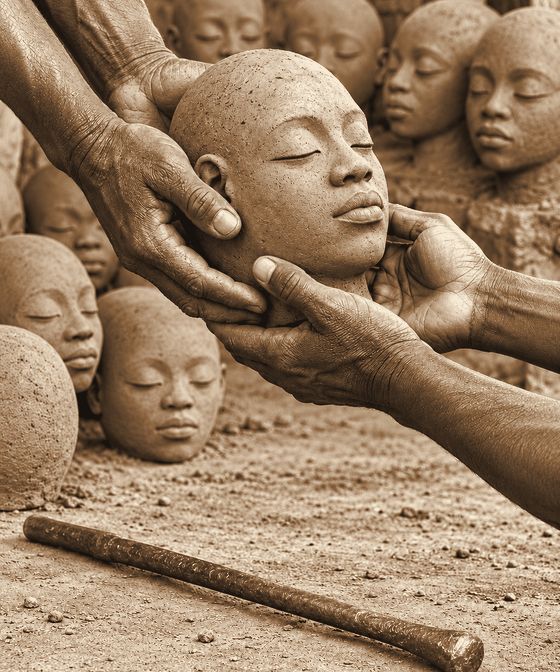
Orí · the inner head
“Before Afuwape came to earth, he needed a head.”
In the house where heads are shaped, each person chooses the one they will carry. A story about the destiny you bring with you into the world.
Stories from the Yoruba world
Then a chain was lowered from heaven. A hen scratched a handful of earth across the waves, and the land began. This is how the Yoruba tell the making of the world, at Ile-Ife, where the story says everything started.
The stories did not stay there. They crossed an ocean with the people who carried them, and they are still told today in Havana, in Salvador da Bahia, in New York and Miami. Some of them may have been waiting for you.
“Wherever a man goes to dwell, his character goes with him.”
Yoruba proverb, recorded in 1894
They were taken across the sea with nothing. They kept their gods, their songs and their stories. Yemọja became Yemayá in Cuba and Iemanjá in Brazil, and the drums never stopped.
A living world
They are drummed, sung and danced today, on both sides of the ocean. If you have ever worn white on New Year’s Eve in Rio, or heard someone in Miami say aché, you have already touched them.
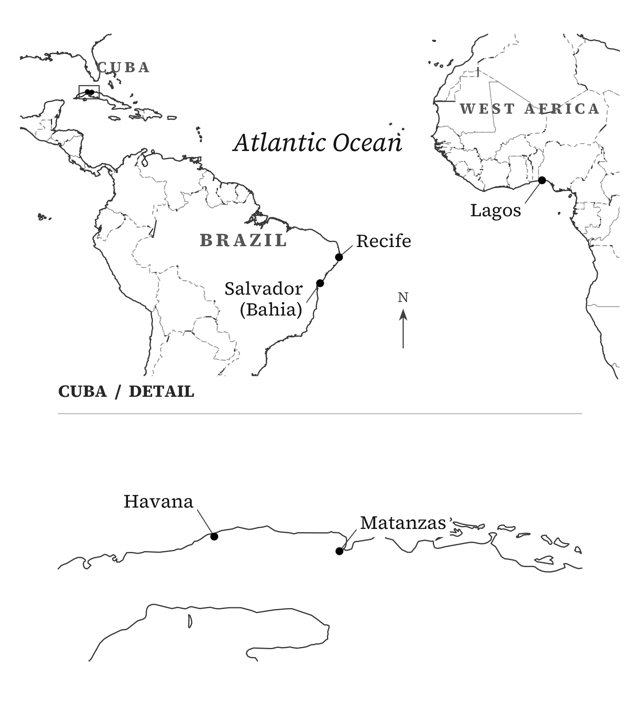
From the Bight of Benin to the Caribbean and Brazil: the road the stories travelled.
Ile-Ife · Nigeria
In the stories, this is where the chain came down from the sky. It is also a real, living city in southwestern Nigeria. People who say they are Yoruba, wherever they were born, still speak of it as the place everything started.
Osogbo · every August
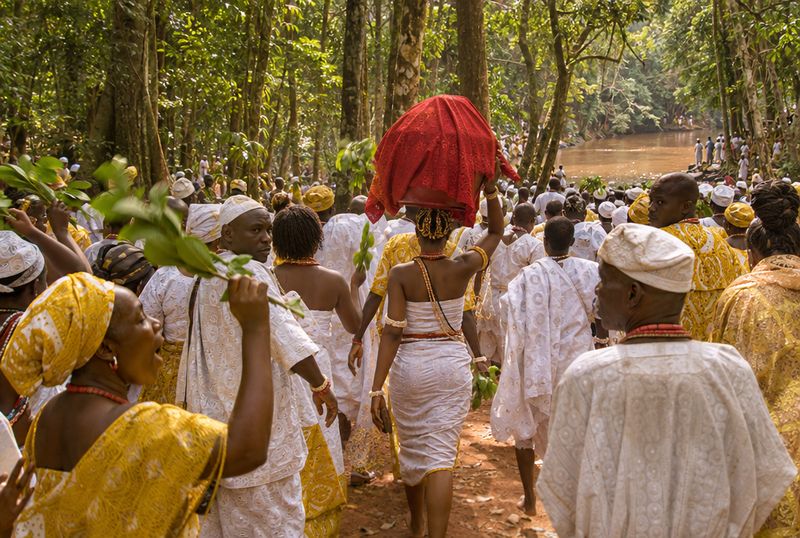
On the banks of the Osun river stands a sacred grove, a UNESCO World Heritage Site since 2005. Each year a young woman of the royal family, the Arugba, carries a covered calabash on her head from the palace down to the water, and the crowd walks with her, singing for Ọ̀ṣun.
Everywhere in Yorubaland
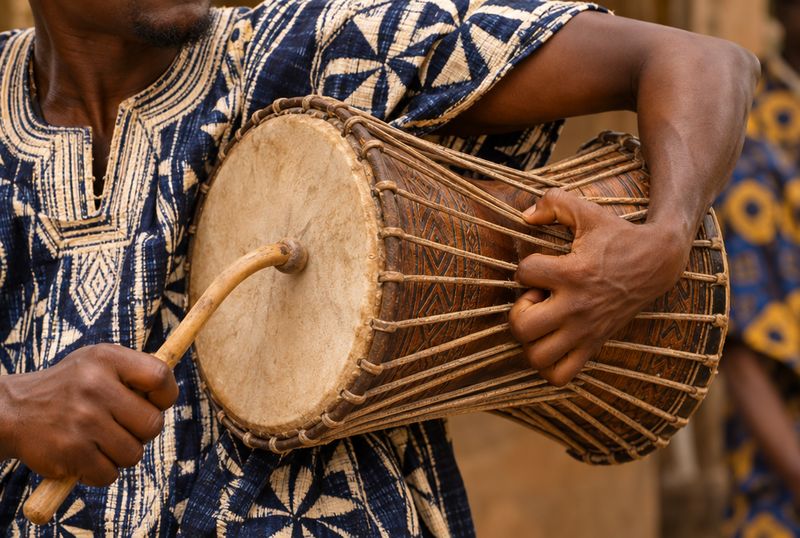
Yoruba is a tonal language: the same syllable changes meaning as the voice rises or falls. The dùndún, the talking drum, squeezed under the arm, follows those rises and falls so closely that people can hear words in it: praise names, greetings, proverbs.
Ifá · a memory kept by heart
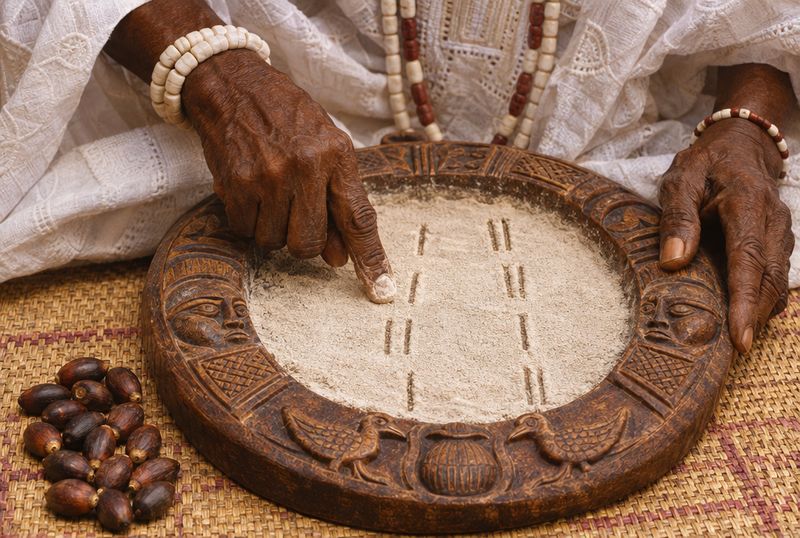
Diviners of Ifá spend years learning a vast body of verses by heart, full of stories like the ones in this book. In 2005 UNESCO proclaimed Ifá a masterpiece of the oral heritage of humanity.
Regla, Havana · 7 September
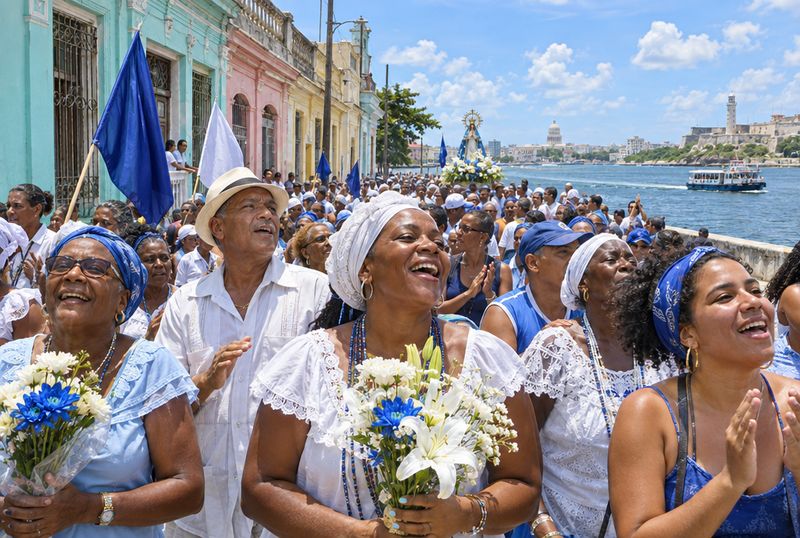
Across the bay from Old Havana, the Virgin of Regla is carried through the streets. Many of the people following her in blue and white are greeting someone else as well: Yemayá, mother of the sea.
Salvador da Bahia · 2 February
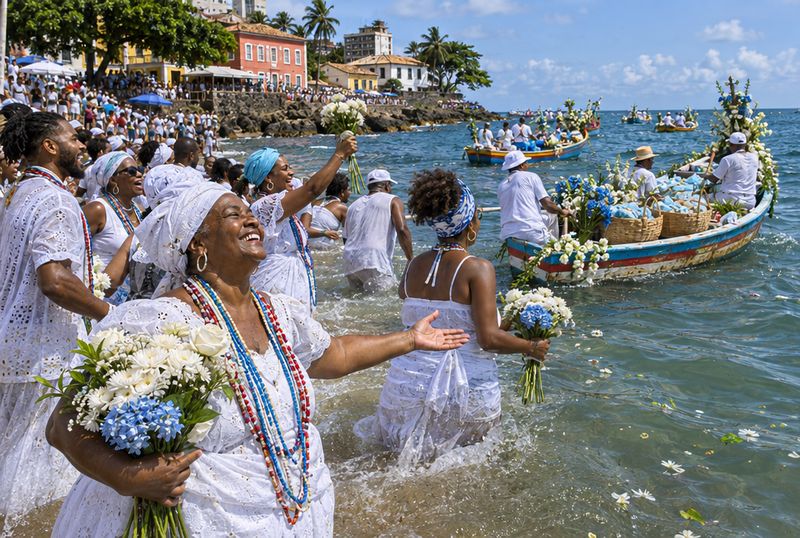
In Rio Vermelho, people dressed in white bring flowers, perfume and small mirrors for Iemanjá. In the afternoon the fishermen’s boats carry the offerings out to sea, while the beach sings behind them.
Copacabana · New Year’s Eve
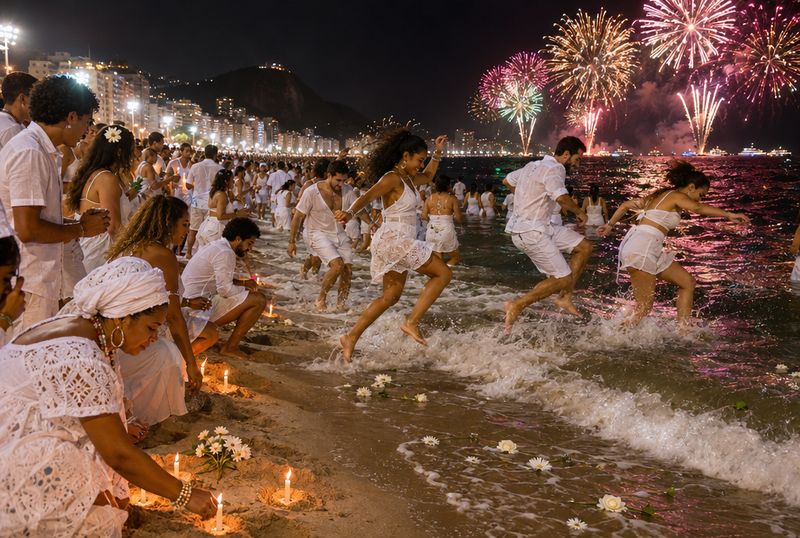
Around two million people on one beach, most of them in white. Some throw white flowers into the water for Iemanjá; many jump seven waves and make a wish with each one. Plenty of them have no idea the custom began with her.
South Carolina · since 1970
Near Sheldon, African Americans founded Oyotunji village, named after the old Yoruba kingdom of Oyo, to live by the orishas on American soil. The road that crossed the ocean one way was walked back, in spirit, the other way.
The scenes of today’s festivals on this page are artistic reconstructions made for this site, not photographs of real people or events.
The stories
Every story in the book opens like this: one line, and you are already inside it.
Orí · the inner head
“Before Afuwape came to earth, he needed a head.”
In the house where heads are shaped, each person chooses the one they will carry. A story about the destiny you bring with you into the world.
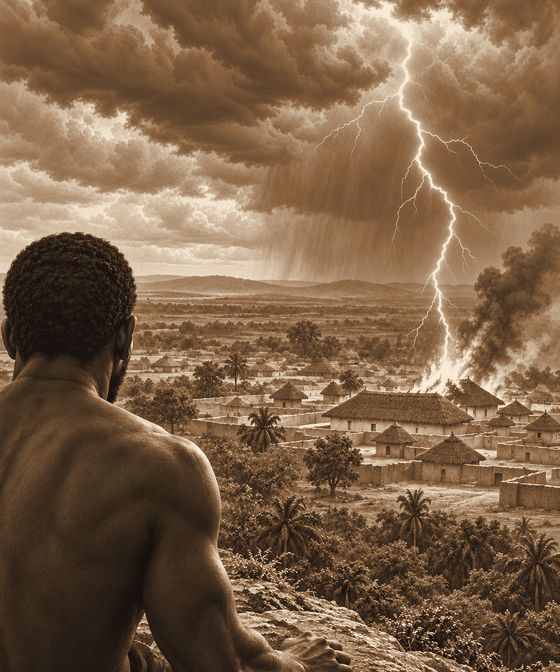
Ṣàngó · thunder
“Shango loved charms the way other kings love horses.”
A king of Oyo who called down the lightning and could not call it back. When the thunder rolls, people still cry out: “Long live the king!”
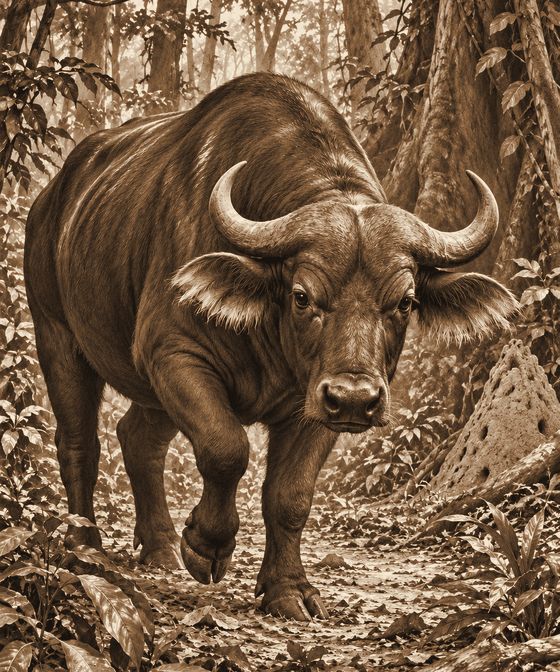
Ọya · wind and storm
“Ogun held still among the trees.”
He saw a buffalo step out of her skin and become a woman. A secret, a marriage, and a promise that two buffalo horns still keep on her altar.

Yemọja · mother of waters
“Olokun put a bottle into her daughter’s hands.”
A gift from the ocean, kept for the day there was nowhere else to run. When that day came, the bottle opened the way to the wide water.
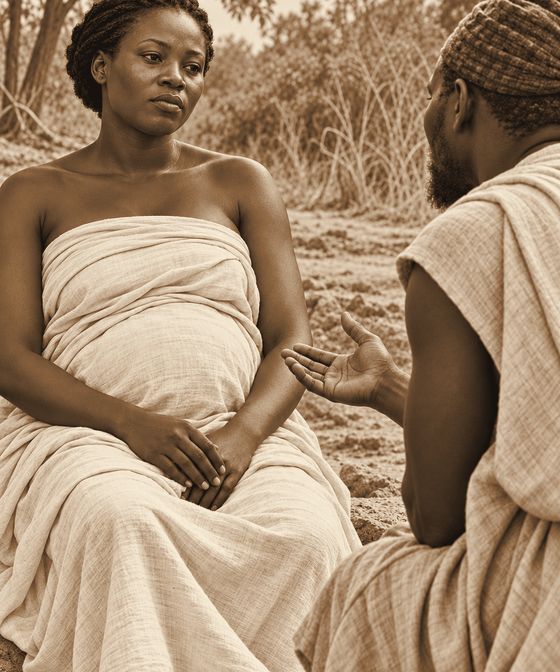
Ọ̀ṣun · sweet water
“Seventeen divinities came to the young earth with instructions from Olodumare.”
Sixteen of them decided they did not need her. Nothing they built would hold, until they came back to the one they had left out.
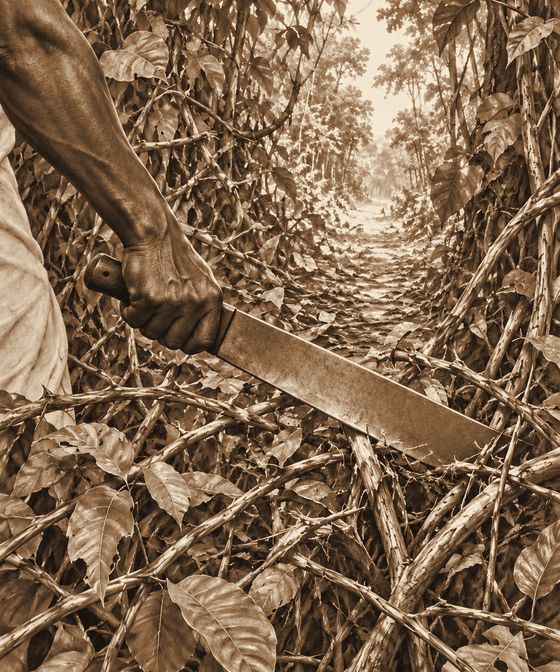
Ògún · iron and roads
“The divinities had a world to inhabit and no way forward.”
Ọbàtálá’s blade bent. Ògún’s iron did not. He opened the road for all of them, and the price he asked would lead him, one day, to Ire.
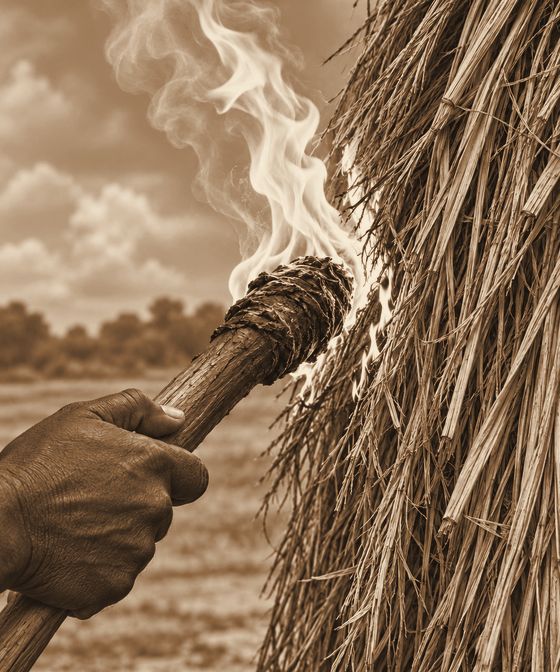
Moremi · heroine of Ife
“Moremi stood at the door of her house in Ile-Ife, listening to fear pass from compound to compound.”
Her city was being raided and no one knew how to stop it. What she was willing to give to save it is still remembered.
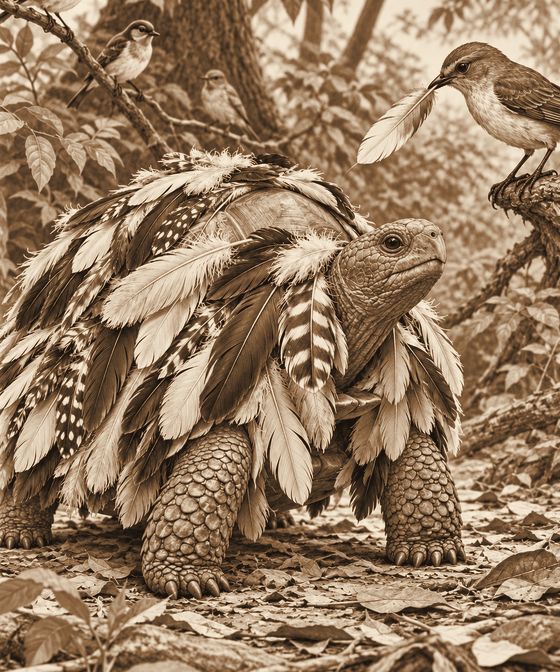
Tortoise · the trickster
“There was a famine, and Tortoise was hungry.”
So he borrowed feathers, flew to the birds’ feast in the sky, and told them his name was “All of Us.” The food was for all of us. He ate it all. That is why his shell is cracked.
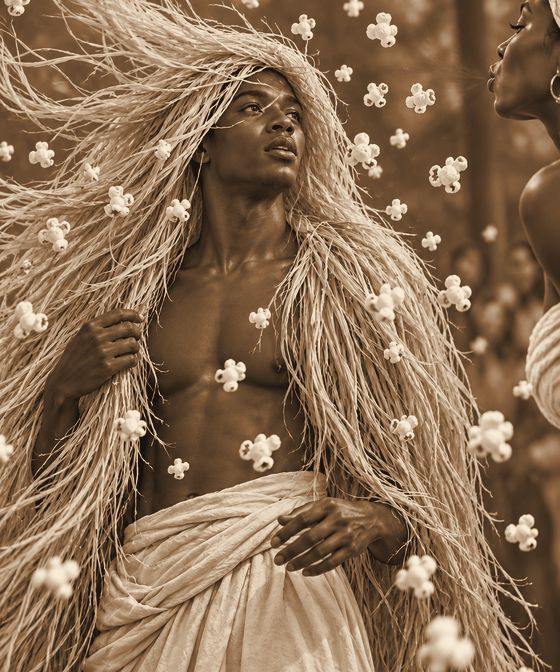
Omolu · the earth and healing
“Omolu looked through a gap into the celebration.”
All the orishas were feasting inside. He stayed at the wall, ashamed of the sores on his body, until Ogum gave him a garment of straw. By the end of the night, white popcorn lay scattered across the hall.
Who these stories are for
I
Yemayá at the beach. Changó in a song. An altar in your grandmother’s house that nobody really explained. Here are the old stories behind those names, told as they were told in Ile-Ife and Oyo, before the crossing.
II
For many families, the story stops at the edge of the Atlantic. No book can give back what was taken. But these stories made the crossing too, and holding them is one way of holding on to the people who carried them.
III
You know Zeus, Odin and Isis. Now meet a god who shapes people from clay, a king who calls down lightning, and a tortoise who talks his way into a feast in the sky. A whole world of stories that school left out.
“It is the path of the needle that the thread is accustomed to follow.”
Yoruba proverb, recorded in 1894
The ones who came before opened the way. We follow it, one story at a time.
The book
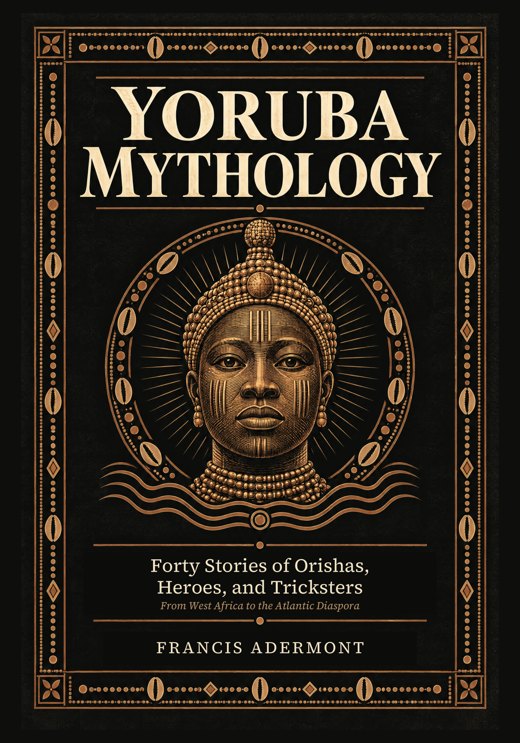
From the chain lowered from the sky to the drums of Cuba and Brazil, in five parts. Each story is told in full, then followed by who is in it, where it comes from, and how it is told elsewhere. Every source is named.
Find it on Amazon Free reader extras
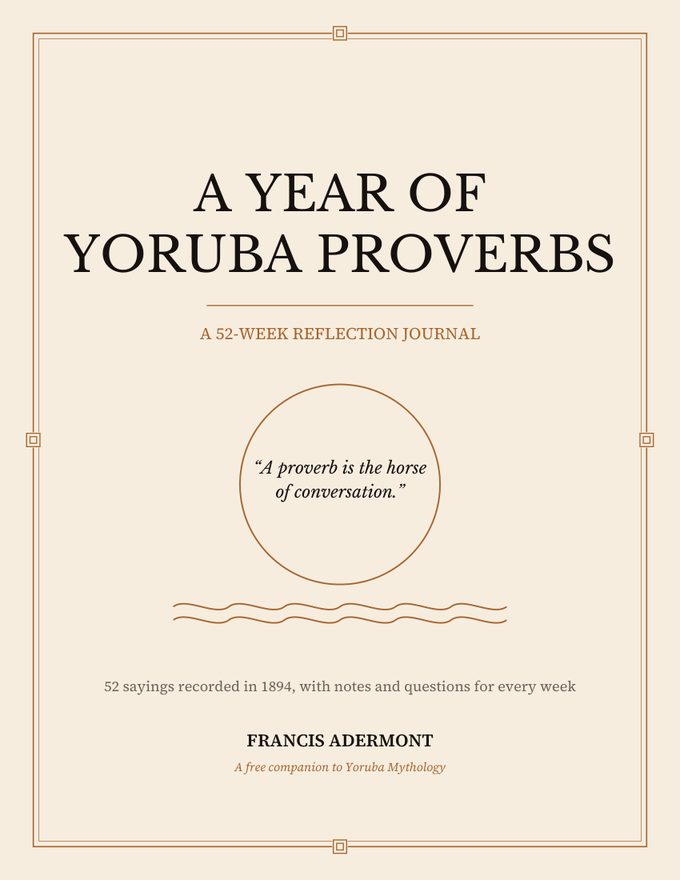
A gift, free
“The dawn does not come twice to wake a man.” Fifty-two proverbs like this one, one for every week of the year, each with a short reading and two questions that are all about you. Print it, keep it beside the book, write in it.
Àṣẹ
A Yoruba word for the power that makes things happen, said at the end of a prayer like “so be it.” In Havana they say aché. In Salvador they say axé. It crossed the ocean too.