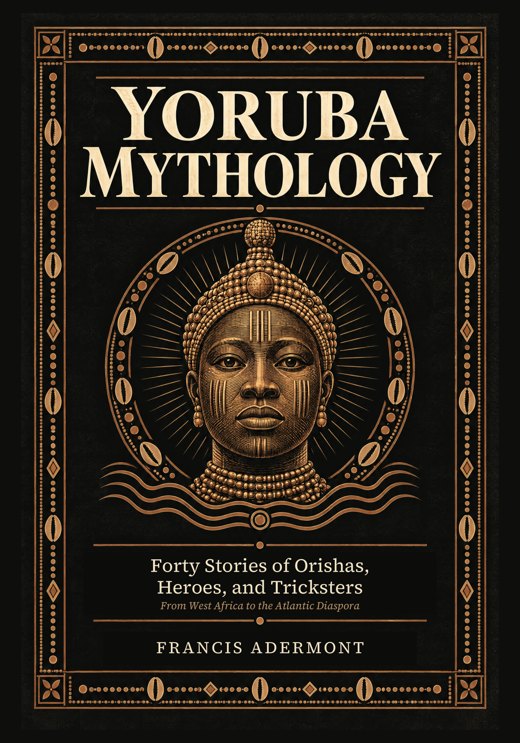
Your free journal
A Year of Yoruba Proverbs
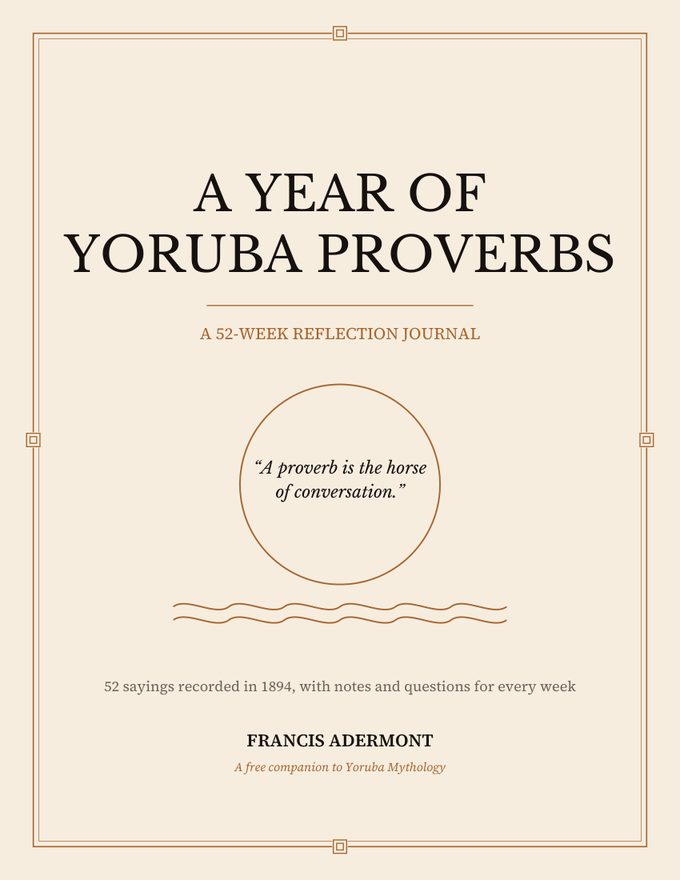
The Yoruba say that a proverb is the horse of conversation: when talk grows tired, a proverb carries it forward. Here are fifty-two of them, one for every week of the year. Read one on a Monday. Carry it with you. By Sunday it will have found its way into something you lived.
The journal
Fifty-two proverbs in seven themes: words and silence, time and patience, character, wisdom, effort, kindness, and humility. Old voices, and questions that are entirely about you.
Download the journal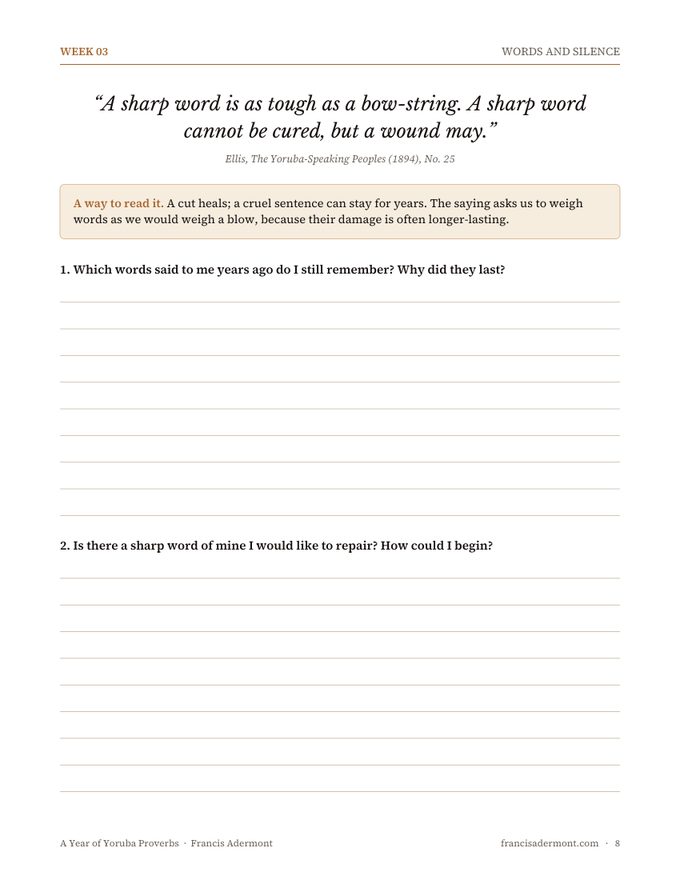
One page, one week
“A sharp word cannot be cured, but a wound may.” Each week brings a saying like this one, a few lines on how it might be read, two questions, and room to answer in your own words.
Where these words come from
These proverbs were spoken long before anyone wrote them down. The English versions here were recorded by A. B. Ellis in 1894 and are now in the public domain. Ellis wrote in the colonial era, so we chose with care: we left out sayings bent by the prejudices of that time and any whose meaning we could not stand behind. The notes and questions are ours.
Names that crossed an ocean
One orisha, three names
Carried across the Atlantic in the memory of people who were taken from their homes, the orishas kept their stories and changed their names. Ọ̀ṣun became Ochún in Cuba and Oxum in Brazil. Yemọja became Yemayá and Iemanjá. If you grew up with one of these names, here is where it came from.
| Yoruba form | Say it | Often linked with | Cuba | Brazil |
|---|---|---|---|---|
| Ọbàtálá | aw-bah-TAH-lah | Shaping of human beings; white cloth | Obatalá | Oxalá |
| Odùduwà | oh-DOO-doo-wah | Ile-Ife and the founding of the land | Oddudua | — |
| Ọ̀rúnmìlà | aw-ROON-mee-lah | Wisdom and Ifá | Orula | Orunmilá |
| Èṣù | EH-shoo | Messages, crossroads, choices | Elegguá | Exu |
| Ògún | oh-GOON | Iron, roads, and work | Oggún | Ogum |
| Ọ̀ṣun | AW-shoon | Sweet water; the river at Osogbo | Ochún | Oxum |
| Ṣàngó | shahn-GOH | Thunder; a king of Oyo | Changó | Xangô |
| Ọya | AW-yah | Wind and storms | Oyá | Iansã |
| Yemọja | yeh-MAW-jah | Rivers and motherhood; the sea in the Americas | Yemayá | Iemanjá |
| Olókun | oh-LOH-koon | The deep sea | Olokun | Olokum |
| Ọbalúayé | aw-bah-LOO-ah-yeh | The earth, illness, and healing | Babalú Ayé | Omolu |
| Ọ̀ṣọ́ọ̀sì | aw-SHAW-see | The hunt | Ochosi | Oxóssi |
| Ọ̀sanyìn | aw-SAHN-yeen | Leaves and their knowledge | Osain | Ossaim |
| Ìbejì | ee-BEH-jee | Twins | Ibeyis | Ibejis |
The reading aids are only a first step: Yoruba is a tonal language, and its music lives in the marks above the letters. Every tradition has its own local ways; the book’s chapters and source notes tell each story in its place.
The year, Yoruba time
Three days when the stories come alive
Some of the stories you read are not only remembered. They are celebrated, with drums, crowds, and rivers full of people.
Early June
Kọ́jọ́dá
The traditional Yoruba new year, often celebrated on 3 June: a time of gatherings, music, and greetings for the year ahead.
August
Ọ̀ṣun-Òṣogbo
The great festival of Ọ̀ṣun at her sacred grove in Osogbo, a UNESCO World Heritage Site, where crowds follow the procession down to the river. The dates are announced each year.
20 August
Ìṣẹ̀ṣe Day
A day to honor Yoruba traditional religion and heritage, recognized as a holiday in some states of southwestern Nigeria.
Dates and customs vary from town to town and year to year. If you plan to attend, check local announcements first.
Where it all happened
Follow the stories on the map
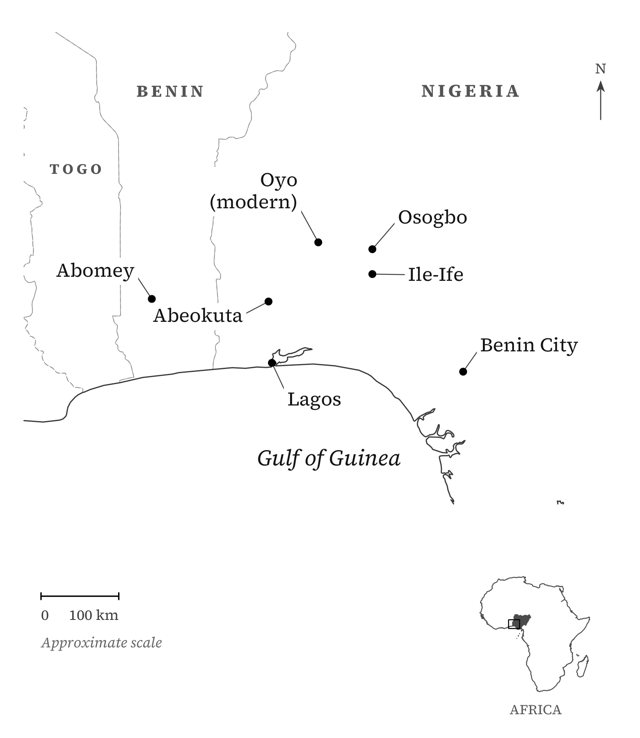
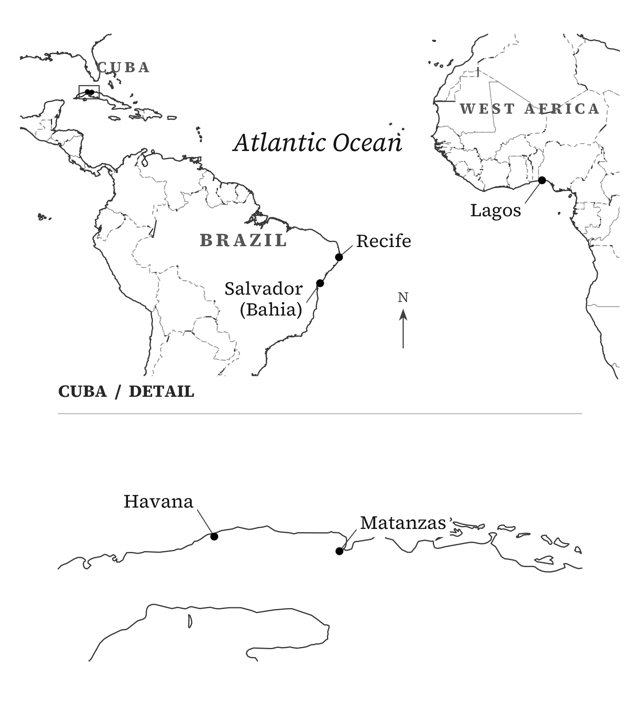
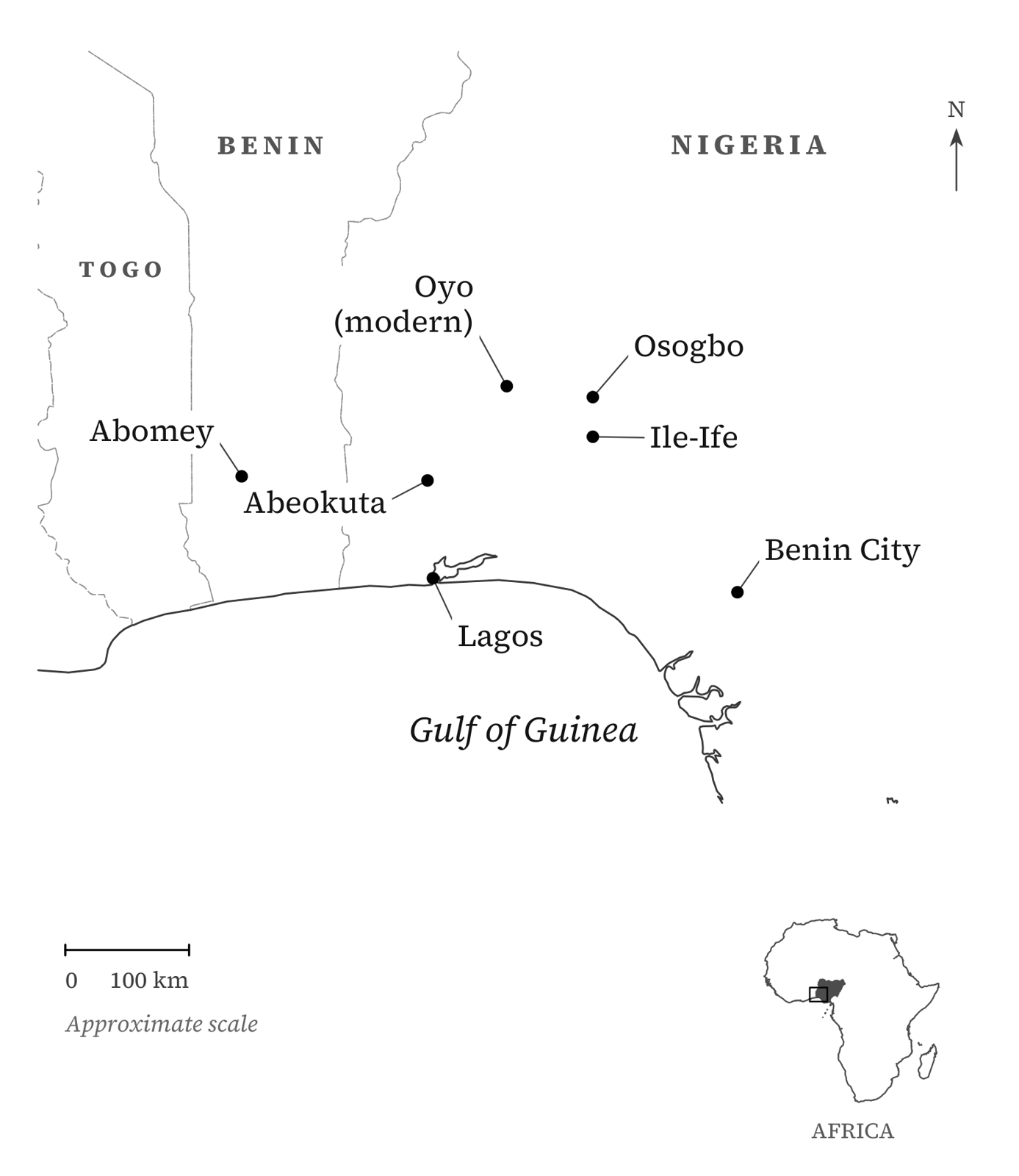
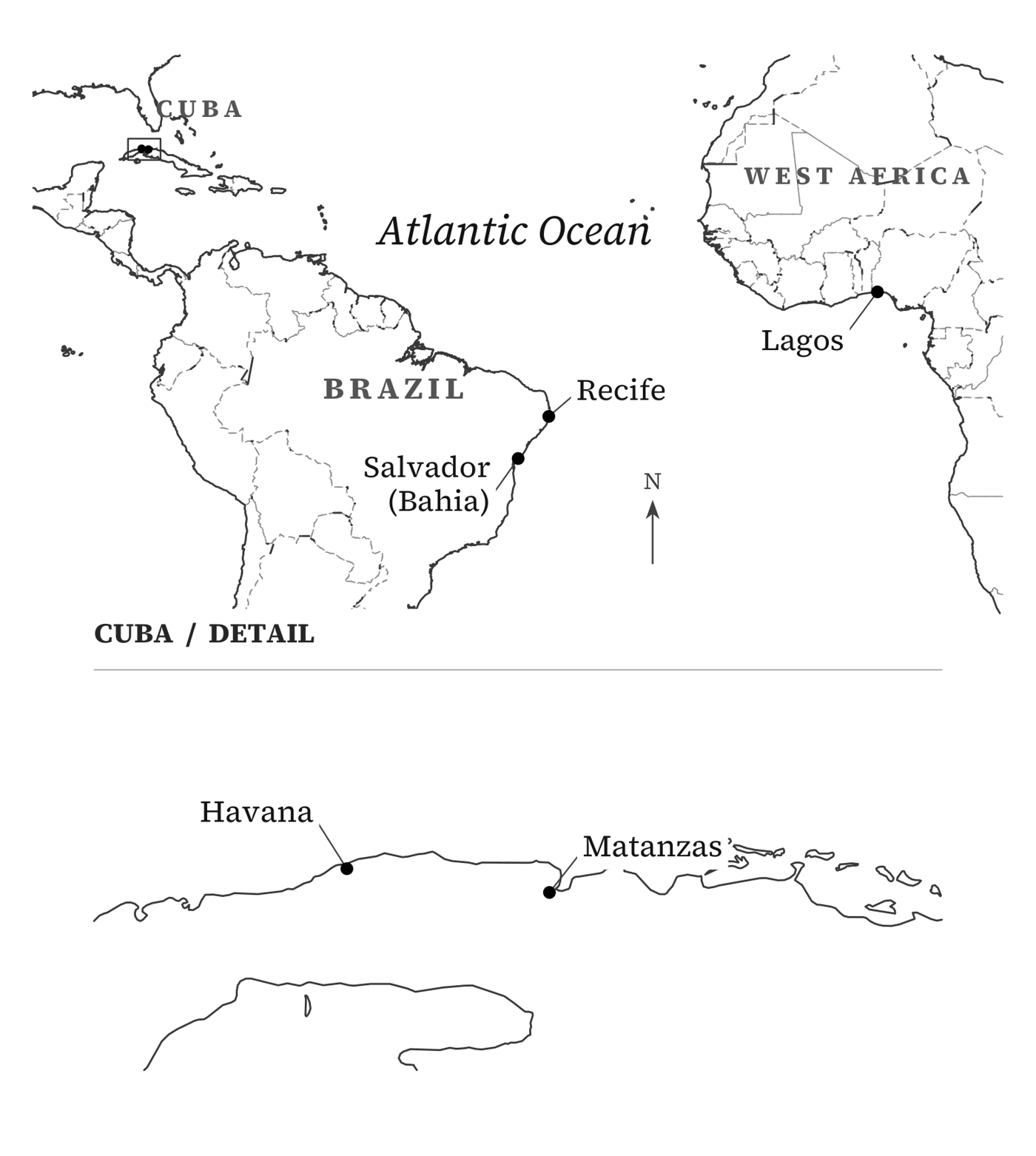
Ile-Ife, where the land was first spread over the water. Oyo, where Ṣàngó ruled. Osogbo and its river. Then the long road across the ocean, to Havana and Salvador. Download both maps at full size and keep them open beside the book.
Did a story stay with you?
Tell another reader which one. A few honest lines on Amazon help these stories reach someone who is looking for them, maybe someone looking for their own roots.